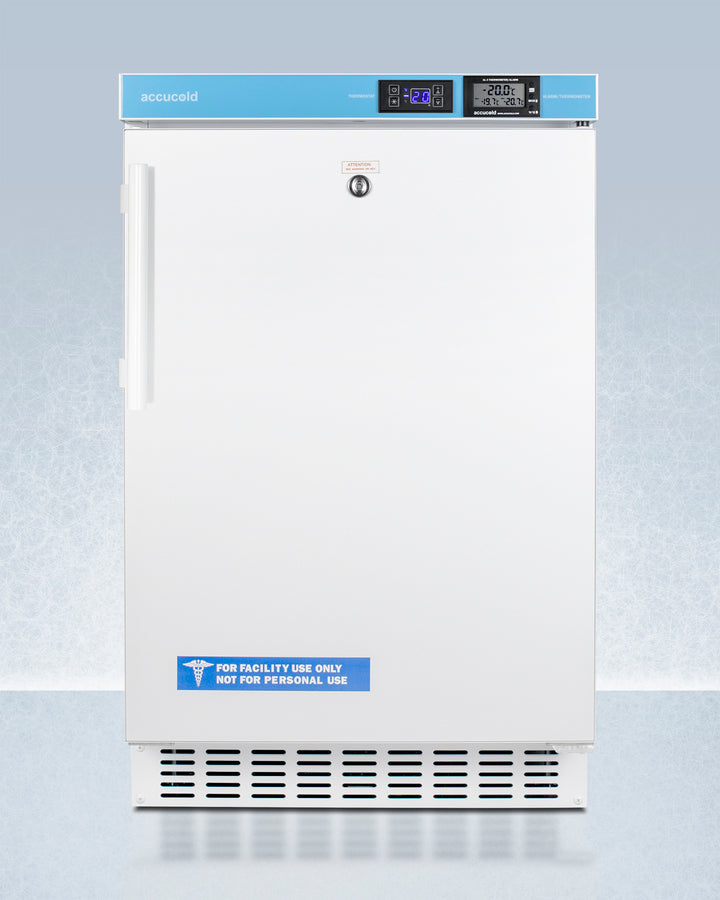
For any clinic or pharmacy, the vaccine inventory represents one of the most valuable—and vulnerable—assets. A single refrigerator, stocked for the flu season or a pediatric clinic, can easily hold tens or even hundreds of thousands of dollars worth of biologics.
Yet, in many facilities, that high-value inventory is being "protected" by a piece of equipment that isn't even qualified for the task: a standard household, or "dorm-style," refrigerator.
This isn't just a minor compliance issue; it's a million-dollar liability waiting to happen. A single cold chain failure—a temperature excursion, a power failure, a door left ajar—can force a clinic to discard its entire inventory, resulting in catastrophic financial losses, a public health crisis, and a complete loss of patient trust.
The guidelines from Health Canada and the CDC are clear: vaccines are fragile biologics that are highly sensitive to temperature fluctuations.
-
Refrigerated Vaccines: Must be stored between 2˚C and 8˚C(26˚F and 46˚F)
-
Frozen Vaccines: Must be stored between -50˚C and -15˚C(-58˚F and +5˚F)
A household refrigerator cannot meet this standard. Here’s why.
Why Household Refrigerators Are Unqualified for Medical Use
1. Temperature Instability:
Household refrigerators are designed with a single goal: to keep groceries "cold enough." They use simple thermostats that result in wild temperature swings, or excursions, as the compressor cycles on and off. You will see this in your own temperature logs—peaks and valleys that frequently breach the 2-8˚C safe zone. Pharmaceutical-grade units use microprocessor-based controls and forced-air circulation to maintain a precise, uniform temperature from top to bottom.
2. Poor Temperature Recovery:
Every time a staff member opens the door, warm air rushes in. A household unit's compressor is not powerful enough to recover (i.e., return to the set temperature) quickly. During a busy clinic day with frequent door openings, the unit may spend hours outside the required temperature range, silently destroying vaccine potency. Pharmaceutical-grade units are built with high-performance compressors designed for rapid recovery.
3. The "Hot" and "Cold" Spots:
Household units are plagued by hot spots (like the door shelves) and cold spots (like the back wall near the freezer). Placing a $100 vaccine vial in the door of a dorm fridge is virtually guaranteed to render it useless. A purpose-built vaccine refrigerator is engineered to ensure uniform temperature throughout the cabinet, making every square inch of storage space safe and compliant.
4. Lack of Compliant Monitoring:
CDC guidelines mandate the use of a Digital Data Logger (DDL) to record temperatures every 30 minutes. While a DDL can tell you a household unit has failed, it's often too late. Modern pharmaceutical-grade units have this monitoring built-in, complete with alarms that can alert staff to a temperature excursion before it becomes a catastrophe.
The Real Cost of "Saving Money"
The perceived "savings" of using a non-compliant refrigerator are an illusion. The real cost is the inevitable failure.
When your provincial health inspector arrives for an audit and sees a non-compliant unit, they can—and will—order you to discard your entire inventory. The financial loss is immediate. But the damage to your clinic's reputation, and the public health impact of having to turn away patients during a critical season, is incalculable.
This is a problem of risk management. A pharmaceutical-grade refrigerator is not an expense; it is a critical piece of infrastructure. It is the only qualified, professional solution for protecting your high-value inventory, ensuring regulatory compliance, and maintaining the trust of the patients you serve.